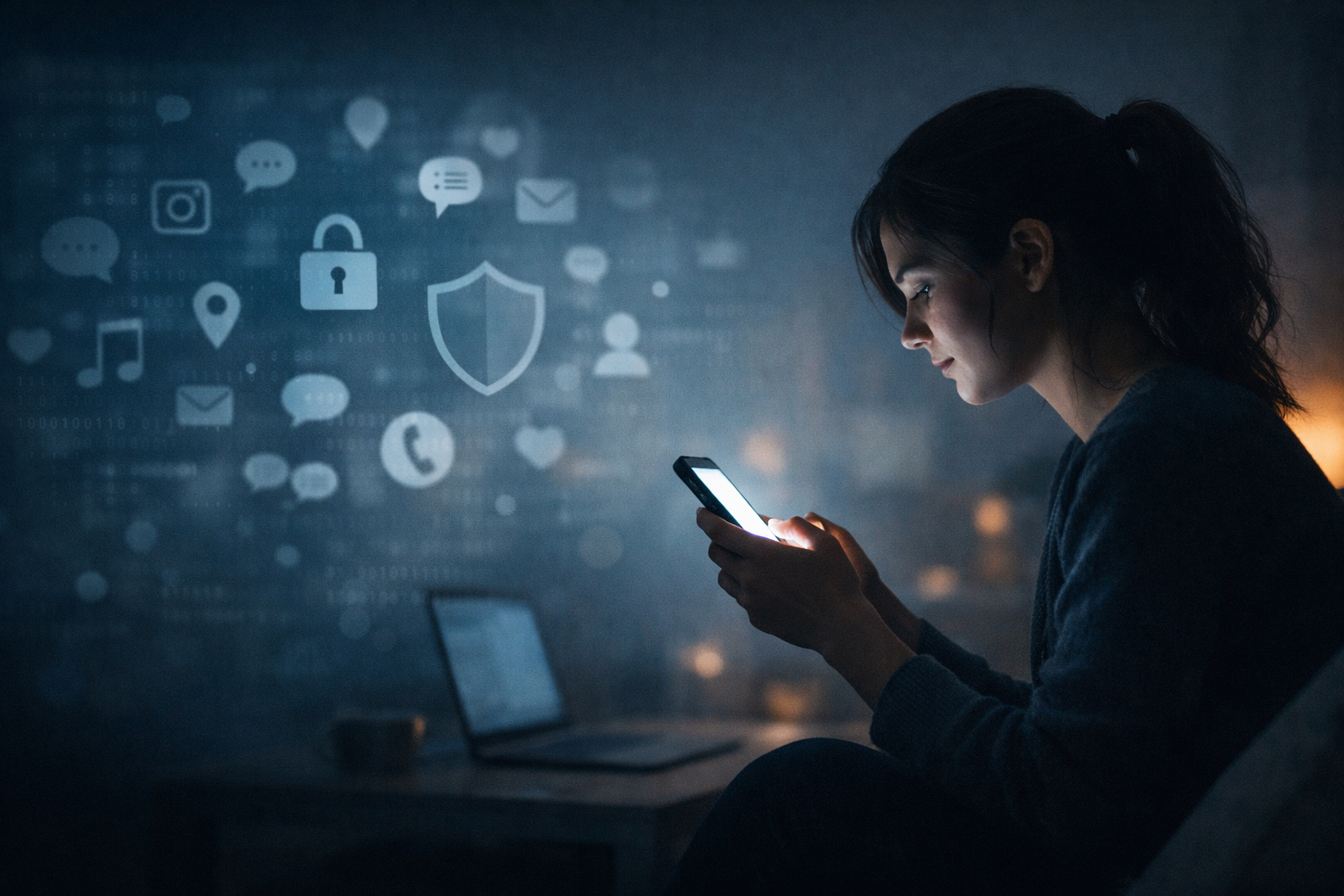
In a world built on sharing, protecting your private life has become an act of wisdom.
We live in a time when sharing online feels normal. People post their thoughts, routines, purchases, opinions, family moments, struggles, and personal stories almost without thinking. Platforms like Facebook and YouTube, along with TikTok, Instagram, and countless apps, have made public exposure feel ordinary.
But just because something is normal does not mean it is harmless.
Many people think privacy is only for those who have something to hide. That is one of the biggest misunderstandings of the digital age. Privacy is not mainly about secrecy. It is about boundaries. It is about protecting your dignity, your freedom, your safety, and your control over your own life.
In today’s world, your digital footprint is not just information. It is power. And the more of that power you give away carelessly, the less of it you keep for yourself.
Privacy protects more than most people realize
Online privacy is not an abstract issue for experts or public figures. It affects ordinary people in very real ways every single day.
It helps protect your identity, your finances, your relationships, your reputation, and even your physical safety. The less strangers know about your habits, location, vulnerabilities, family, and routines, the harder it is for them to exploit that information.
But privacy protects more than your safety. It also protects your humanity.
It gives you space to think, search, learn, ask questions, make mistakes, and change your mind without every action becoming part of a permanent profile. It allows you to explore ideas without feeling like every curiosity is being tracked or judged.
That freedom matters more than many people realize.
The problem with saying, “I have nothing to hide”
A lot of people dismiss privacy concerns by saying, “I have nothing to hide.” On the surface, that may sound reasonable. But it misses the point entirely.
You close the bathroom door not because you are doing something wrong, but because dignity matters. The same principle applies online. Privacy is not mainly about hiding guilt or shame. It is about maintaining appropriate boundaries around your personal life.
Once your data is collected, you often lose control over what happens next. It may be stored, sold, shared, leaked, misinterpreted, or used out of context. Even small pieces of information that seem harmless on their own can become highly revealing when combined together.
A few crumbs of data can become a detailed map of your life.
The ugly side of losing privacy
This is where the issue becomes more serious.
Your data is valuable not only to advertisers, but also to scammers, stalkers, abusive individuals, data brokers, manipulative platforms, and hostile actors. They may not know you personally, but systems are designed to recognize patterns, and patterns can reveal far more about you than you may realize.
Those patterns can show when you are lonely, stressed, financially pressured, emotionally reactive, sick, or vulnerable.
That information can then be used to target you with scams, manipulative messaging, predatory offers, identity theft, harassment, blackmail, or social engineering.
This is the uncomfortable truth: when too much of your life becomes visible, it can be used against you.
What privacy loss really looks like
Most privacy loss does not happen in one dramatic moment. It happens quietly, piece by piece.
Your search history can reveal fears and questions you never told anyone.
Your location data can show where you live, where you sleep, where you shop, and who you visit.
Your purchases can expose your habits, financial pressures, and even health concerns.
Your likes, comments, watch history, and messages on platforms like Facebook and YouTube can reveal your values, beliefs, and emotional triggers.
Your contact list can map your personal network.
Your photos and videos can reveal your home, your family, and your routines.
Each detail may seem small on its own. But together, they form a powerful digital profile — one that others can analyze, predict, and profit from.
The hidden risk of sharing your life story online
There is another side to privacy that deserves honest attention, especially now that so many people share deeply personal parts of their lives on Facebook and YouTube.
For everyday users, it may look like posting emotional updates, family struggles, relationship pain, or personal frustrations on Facebook. For content creators, it may look like turning private hardship, family conflict, trauma, or personal healing into YouTube content for public viewing.
Sometimes people do this for support. Sometimes for connection. Sometimes because sharing feels healing. And sometimes because the online world rewards visibility and engagement.
But what feels comforting in the moment can become costly later.
The internet rarely forgets.
A painful Facebook post shared during a difficult season can follow a person for years. A YouTube video recorded in a moment of vulnerability can be replayed, clipped, reposted, misunderstood, or judged without context.
What once felt like honest vulnerability can later become a source of regret, embarrassment, or even exploitation.
This does not mean people should never be open. Honesty has value. Sharing experiences can help others feel less alone.
But wisdom lies in knowing the difference between healthy openness and overexposure.
Not every pain needs an audience.
Not every wound needs to become content.
Not every chapter of your life needs to be public while you are still living through it.
When private life becomes content
This is especially important for people who create content on platforms like YouTube and Facebook.
Sometimes the posts or videos that gain the most attention are the most personal ones. Family conflict, financial hardship, emotional struggles, and deeply vulnerable moments can attract large audiences because people are naturally drawn to human stories.
For creators, this can feel rewarding at first.
More views.
More engagement.
More subscribers.
More attention.
But there is a hidden tradeoff.
When personal pain becomes content, a creator may gain short-term growth but lose something much harder to recover later: their privacy, their boundaries, and sometimes their peace of mind.
Once deeply personal stories are shared publicly, strangers may begin to feel entitled to judge them, reinterpret them, criticize them, or replay them years later.
Family members who never chose to be public may also become part of that exposure.
In other words, people can unintentionally begin trading privacy for attention or income, only to discover later that the long-term cost is higher than expected.
Privacy and mental freedom
There is also a psychological cost to losing privacy.
When people know they may be watched, they begin to change. They speak less freely. They search less openly. They become more cautious, more filtered, and more guarded.
Over time, they may begin to self-censor.
That is why privacy is deeply connected to freedom of mind.
Without privacy, people slowly stop being fully themselves and begin behaving as if they are always on display.
In some places, privacy can mean the difference between freedom and prison
There is another reality many people in open societies sometimes forget.
In some parts of the world, what people say online can have serious consequences.
Governments may monitor social media platforms, messaging apps, search history, and online discussions. Posts, comments, videos, or even private messages can be used to identify individuals who criticize authority or discuss sensitive issues.
In some cases, this can lead to harassment, surveillance, detention, or imprisonment. In the harshest environments, it can even cost someone their life.
For people living in those countries, privacy is not simply about dignity or convenience. It is about personal safety and survival.
This reality reminds us that the ability to speak freely and maintain privacy online is not guaranteed everywhere.
The economic side most people ignore
There is also a financial reality behind all of this.
Your data is valuable. In many cases, it is one of the most valuable things you produce online. Yet most of the profit made from it goes to other people.
Many “free” platforms are not truly free. On services like Facebook and YouTube, users often pay with their data, behavior, attention, and preferences.
That information helps shape what people see, what they click, what they buy, and what keeps them engaged.
At that point, privacy becomes not just a personal issue, but an economic one.
Privacy is not all-or-nothing
Caring about privacy does not mean rejecting technology or becoming extreme.
Convenience has real value. Maps need location data. Cloud backups can save years of work. Online tools make life easier.
The key is not sharing nothing — it is being intentional about what you share.
Before handing over your data, ask:
Who is collecting it?
Why do they need it?
How long will they keep it?
Who else will have access to it?
Is the tradeoff worth it?
That mindset is far healthier than blind trust.
Privacy is stewardship
Privacy is not paranoia.
Privacy is not secrecy.
Privacy is not antisocial.
Privacy is stewardship.
It is deciding who gets access to different parts of your life and understanding that once your data escapes, it is very difficult to take it back.
You can change a password.
You cannot easily change your history, your face, your voice, or the digital trail you have left behind.
That is why privacy matters before something goes wrong, not after.
Final takeaway
At the heart of this issue is a simple truth:
When privacy disappears, power shifts away from the individual and toward whoever holds the data.
That is why online privacy matters.
Not because we are hiding something, but because wisdom tells us that some parts of life should remain under our care.
Whether you are scrolling through Facebook, watching videos on YouTube, or creating content for others to see, the same principle applies: be intentional about what you reveal and what you choose to keep private.
Privacy protects your autonomy.
It reduces your exposure to harm.
It preserves dignity.
It limits manipulation.
And in some situations, privacy protects your finances — while in other parts of the world, it may even protect your freedom or your life.
In the digital age, protecting privacy is not paranoia.
It is wisdom.